How to Write TikTok Shop Affiliate Briefs That Creators Actually Use: 2026 Step-by-Step
Write TikTok Shop briefs creators actually read. Includes the 1-page brief template, 5 common mistakes that kill compliance, and real before/after examples.

You signed 50 creators last quarter. Sent them all the same brief. Got maybe 15 videos back — eight of which were basically identical. Three creators never posted at all. And the ones who did? Half of them went quiet after the first video.
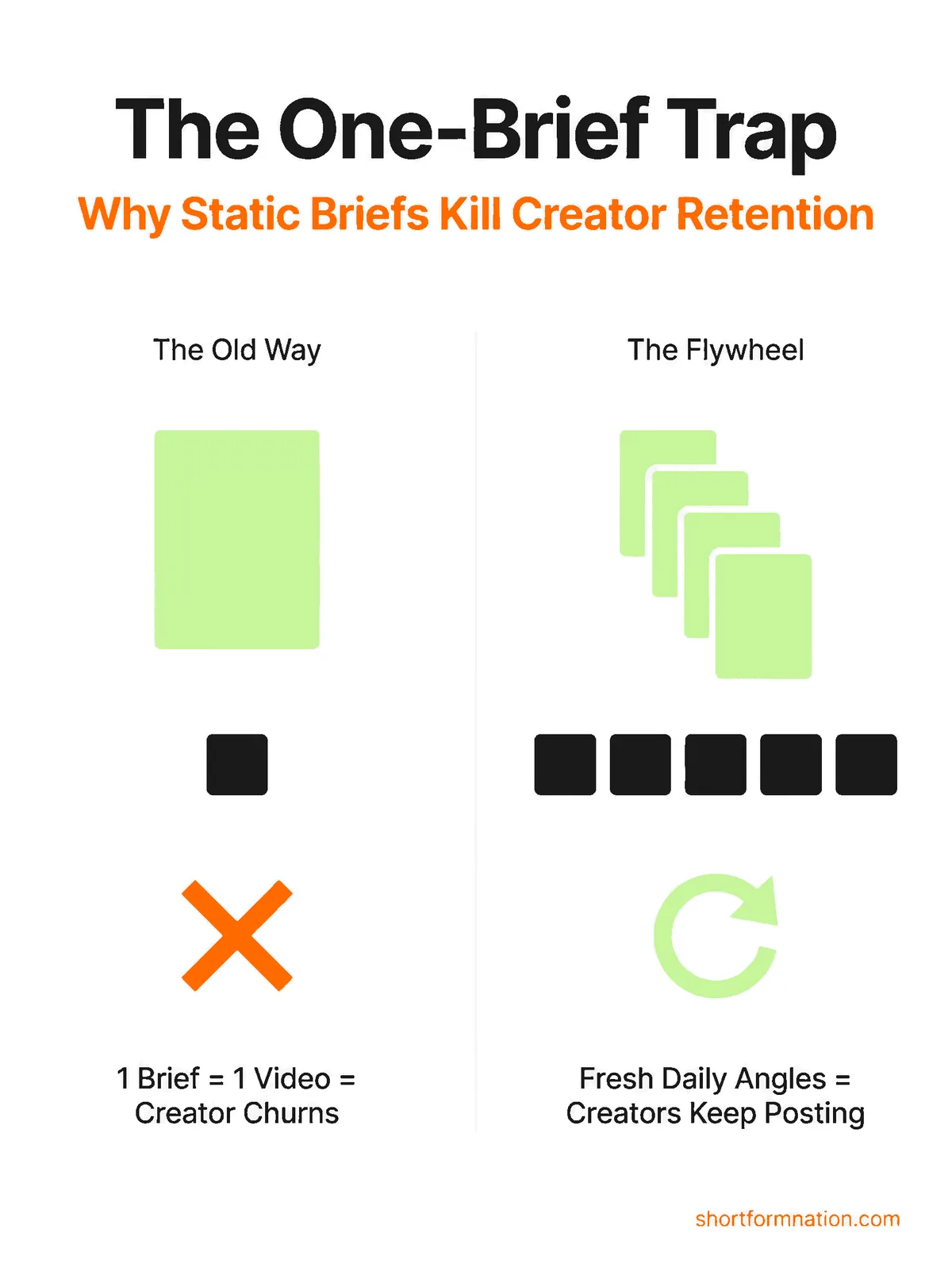
The brief wasn't bad. It had product info, talking points, a decent commission. But here's the uncomfortable truth: a single brief produces a single video. After that, your creator is staring at their camera wondering what to make next. No new angles. No fresh hooks. No clarity on what's actually converting right now.
That hesitation kills more videos than bad content ever will.
According to Later's 2026 Brand Guide to TikTok Shop, creator videos drive roughly two-thirds of all TikTok Shop sales. That makes your creator content pipeline the single biggest lever in your business. And right now, most brands are treating it like a one-time handoff instead of a daily operating system.
This guide covers both sides of the equation. First, how to write a day-one brief that actually gets used — the structure, the templates, the commission strategy. Then, the part nobody talks about: how to build a content flywheel that keeps creators posting daily, not just once.
Because the brief is just the starting line. The real game is what happens after.
Why Most TikTok Shop Affiliate Briefs Fail
The typical TikTok Shop affiliate brief falls into one of two traps. Understanding which one you're in is the first step toward fixing it.
The over-script trap happens when brands try to control every word. They write three-page briefs with exact scripts, required phrases, mandatory talking points, and specific camera angles. The result? Content that feels robotic and forced. TikTok's algorithm actively penalizes content that reads as over-produced, and audiences scroll past it in under a second. According to Modash's influencer briefing research, dictating every word makes posts feel “robotic and inauthentic” — the exact opposite of what drives TikTok Shop conversions.
The under-brief trap is the opposite problem. Brands send a product and a Slack message saying “make something cool.” The creator has zero direction. They guess at the angle, miss the key product benefit, maybe even make a compliance-violating claim. The content is authentic but unfocused — and unfocused content doesn't convert.
According to Resourcera's TikTok Shop Statistics, of 15.3 million TikTok influencers in H1 2025, only 851,000 — roughly 5.57% — were actively selling through videos or live streams. The drop-off from “signed up” to “actively posting” is massive.
That 94% gap isn't all about bad briefs. But briefs are where the content pipeline starts — or stops. And even the creators who DO post face a bigger problem: what do they make for video number two? And three? And twenty?
This is where most affiliate programs stall. Not because creators lack talent. Because they lack daily clarity on what to make next.
But the brief problem has a solution — and it starts with understanding the anatomy of one that actually works.
What Should a TikTok Shop Affiliate Brief Include?
The best TikTok Shop affiliate briefs share three characteristics: they're short (one page max), they lead with boundaries instead of scripts, and they give creators creative ammunition — not creative constraints.
Product Pillars, Not Scripts: The “Don'ts Over Dos” Framework
Here's the counterintuitive insight that separates effective briefs from ignored ones: your Don'ts list matters more than your Do's list.
When you tell a creator “Don't mention competitors,” “Don't film in low light,” and “Don't make health claims” — you've created a creative sandbox. Everything inside the sandbox is fair game. The creator knows exactly where the boundaries are, which frees them to be creative within them.
Contrast that with a Do's-heavy brief: “Do mention the 30-day guarantee. Do show the product from three angles. Do use the hashtag #TikTokMadeMeBuyIt. Do say the price within the first 10 seconds.” That's not a brief — that's a script pretending to be a brief. And scripted content underperforms native content every time on TikTok.
The Insense briefing framework calls this approach “providing product pillars, not rigid scripts.” Give creators the angles — the content direction that leaves room for authentic execution.
The 7 Elements Every TikTok Shop Brief Needs
Keep it to one page. Here's what belongs on it:
Open Collaboration vs. Target Collaboration: How the Brief Changes
TikTok Shop now operates on two collaboration modes, and your brief strategy should differ for each.
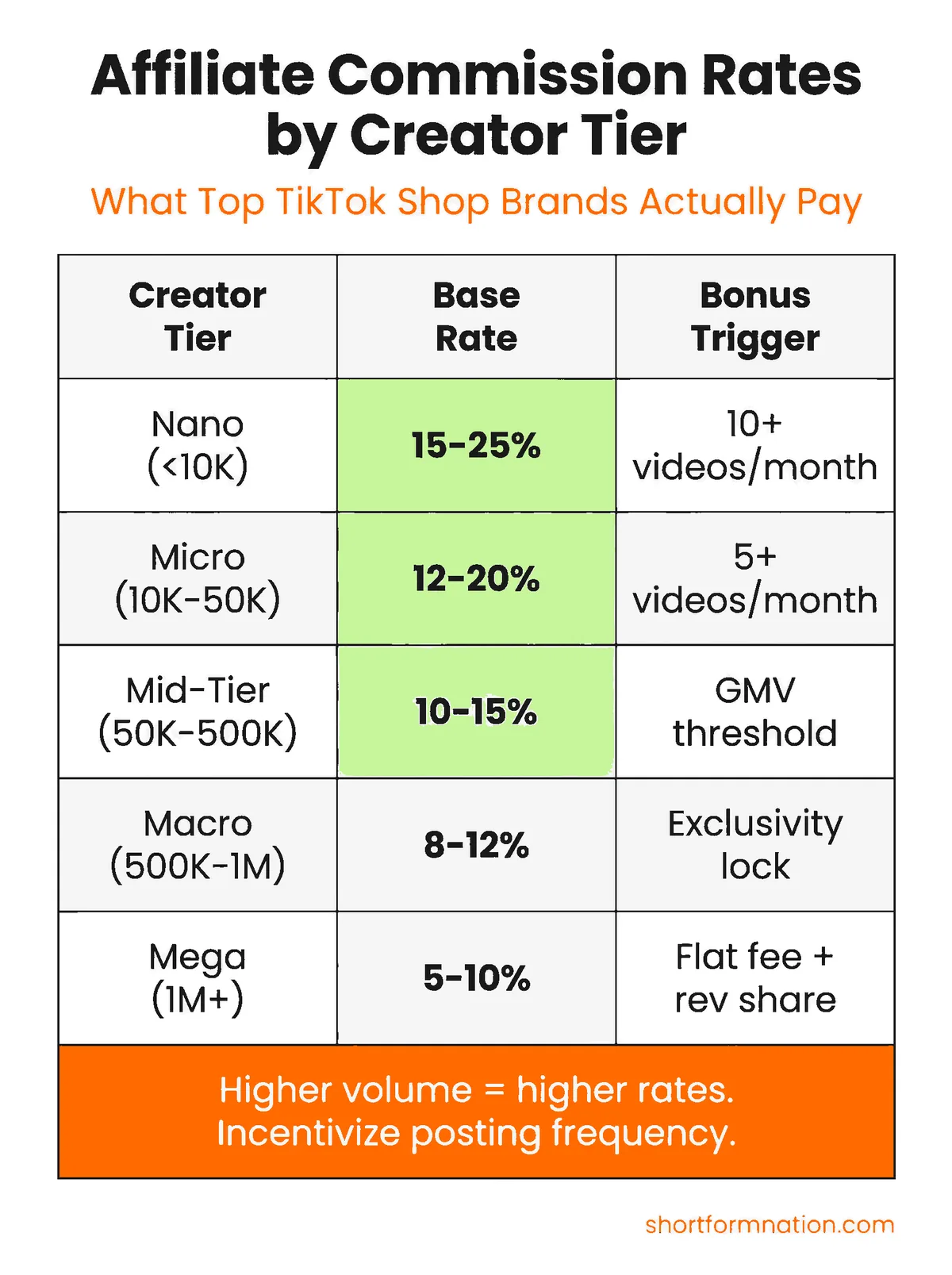
Open Collaboration is your public-facing marketplace listing. Every qualified creator can see it and apply. The “brief” here is really your product listing copy plus a baseline commission rate. Keep it tight — product benefits, commission rate (10-15% baseline), and your brand's value proposition. You're casting a wide net, so don't over-invest in a detailed brief that thousands of creators may or may not read.
Target Collaboration is for hand-picked creator partnerships with custom terms. This is where the full brief matters. You're investing in a specific creator because their audience matches your product. The brief should include everything above — product pillars, hook options, talking points, Don'ts, proof videos. The target collaboration commission rate always supersedes the open rate, so use a higher rate (15-25%) as an incentive.
The brief isn't a one-size-fits-all document — and neither is the campaign itself. For a complete walkthrough of launching your affiliate program, see our step-by-step campaign setup guide. But even the best day-one brief has a shelf life — which is why creator size determines how much structure to include.
Tiered Brief Templates by Creator Size
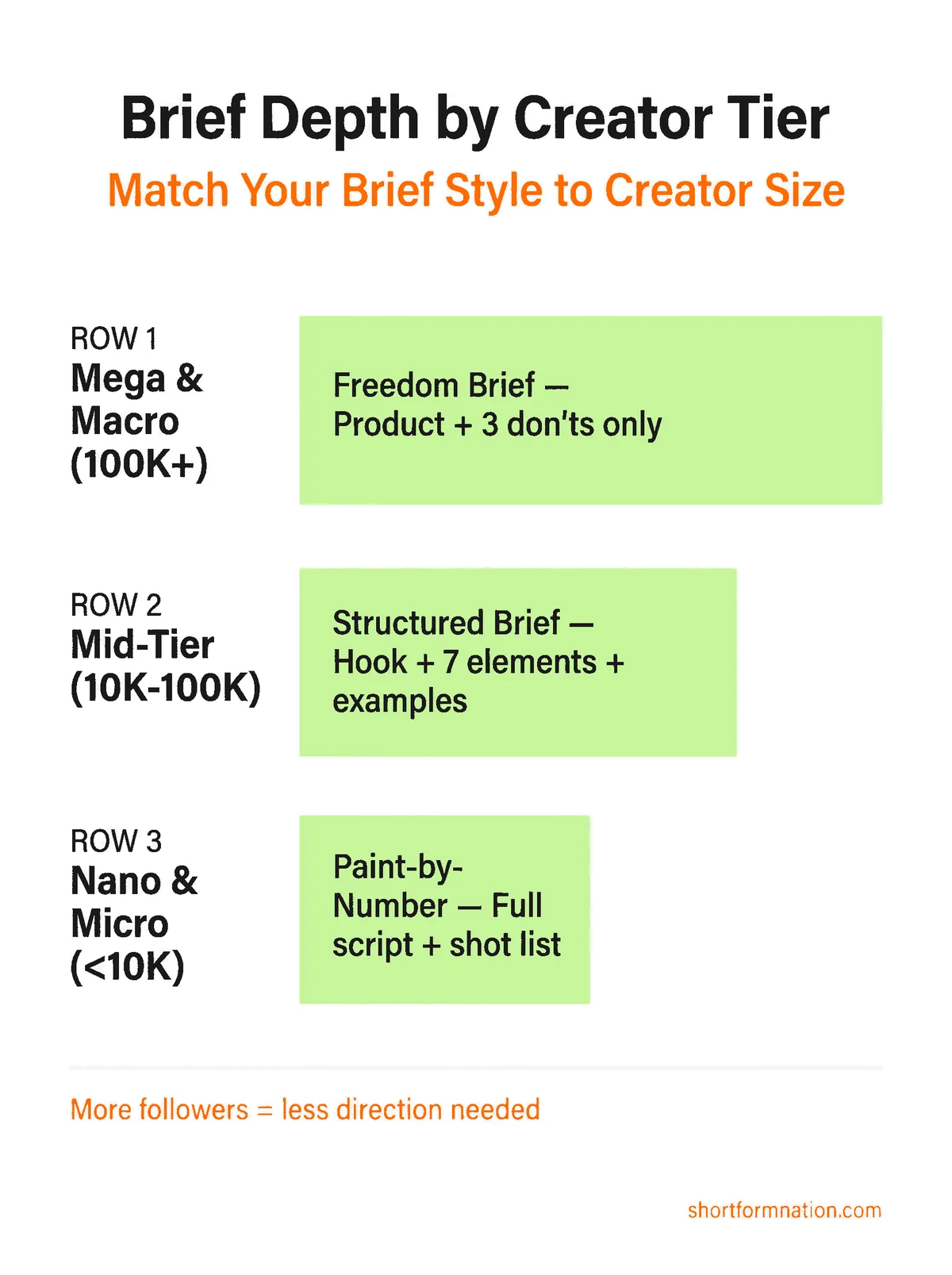
Not every creator needs the same level of direction. Brief depth should scale inversely with creator experience — the more experienced the creator, the less structure they need.
How Detailed Should a TikTok Shop Brief Be?
| Creator Tier | Follower Range | Brief Length | What to Include | What to Skip |
|---|---|---|---|---|
| <strong>Mega / Macro</strong> | 100K+ | Half a page | Product info, Don'ts list, commission, 1 proof video | Hook suggestions, talking points, shot-by-shot guidance |
| <strong>Mid-Tier / Micro</strong> | 10K–100K | One full page | All 7 elements — product info, hooks, talking points, Don'ts, commission, samples, proof videos | Word-for-word scripts, overly specific timing requirements |
| <strong>Nano</strong> | Under 10K | One page + shot list | All 7 elements PLUS a step-by-step shot list with timing per section and visual requirements | Nothing — nano creators benefit from maximum clarity |
Mega and Macro Creators (100K+)
These creators know what works with their audience better than any brief can prescribe. Over-briefing a mega creator is the fastest way to get ignored. Give them the essentials: product, boundaries, and commission. Then get out of the way.
Mid-Tier and Micro Creators (10K–100K)
This is the sweet spot for detailed briefs. Mid-tier creators are skilled enough to produce quality content but benefit from creative direction. According to FastMoss's U.S. TikTok Shop 2025 analysis, creators with 10K-250K followers outperformed mega-influencers thanks to authenticity, niche expertise, and posting frequency.
Provide all seven brief elements. The hook options are especially valuable here — mid-tier creators often know HOW to film but struggle with WHAT angle to take. Give them the angle; they'll execute it better than you could script it.
Nano Creators (Under 10K)
Nano creators have genuine audiences but limited experience with branded content. A brief alone isn't enough — they need a shot list that breaks down the video section by section: hook (first 3 seconds), demo (10-20 seconds), CTA, and objection handling.
This isn't scripting — it's scaffolding. The creator still brings their voice. The shot list ensures they hit the structural beats that drive conversions.
Here's the thing. Even the most perfectly crafted brief produces one video. Maybe two if you're lucky. And then the creator goes silent — not because they're lazy, but because they've used up all the creative fuel you gave them.
What Commission Should You Offer in TikTok Shop Affiliate Briefs?
Commission isn't just a payment — it's a signal. The commission section of your brief tells creators how seriously you take the partnership and whether it's worth their time to keep posting.
What to Offer
Standard TikTok Shop commission ranges for 2026:
For a deeper breakdown by product category and optimization strategies, see our complete guide to TikTok Shop affiliate commission rates. For how different payment structures affect creator retention, see our guide to TikTok Shop creator payment models.
The 30-Day Commission Lock — And Why You Should Mention It
TikTok enforces a 30-day commission lock that protects creators. If you raise your commission rate, creators get the increase immediately. If you lower it, their original higher rate stays locked for 30 days with a two-day advance notice.
Most brands don't mention this in their briefs. They should. Including it signals transparency and builds creator trust — especially for newer creators who may be skeptical about brands changing terms after they've already produced content.
Add one line to your brief: “Your commission rate is locked for 30 days — TikTok protects creators from rate drops. We don't plan to lower rates, but you're protected either way.”
Performance Bonuses as Brief Incentives
The most effective commission strategies aren't flat rates — they're tiered. Include a bonus structure directly in the brief:
The consistency bonus is strategic. It directly incentivizes the posting frequency that drives GMV growth. Creators who post 5+ times per week see 3.2x higher GMV than those posting twice — so paying more for consistency isn't generosity. It's math.
But even with the right commission structure, there's a deeper problem that money alone can't solve.
From One Brief to a Daily Content Flywheel
This is where most affiliate programs break. The brief is sent. The first video goes up. Maybe a second. Then silence. Not because the creator doesn't want to post — but because they're staring at their camera with no idea what to make next.
Why the First Brief Is Just the Starting Line
The math is straightforward. One brief inspires one or two videos. After that, the creative fuel runs out. The creator doesn't know what's trending this week, which hooks are converting, or what angle hasn't been done to death already.
This is the one-brief trap — and it's the #1 reason affiliate programs plateau.
Monthly briefs don't solve it either. TikTok moves at daily speed. By the time a monthly deck lands in a creator's inbox, the trends have moved. The hooks are stale. The formats are played out.
Based on SFN AI's platform data, creators who post 5+ times per week see 3.2x higher GMV than those posting twice per week. One video per creator isn't a program — it's a sample.
What Creators Actually Need
The gap isn't talent. It's intelligence. Creators need three things on a recurring basis:
Deliver those three things daily, and you've built a content flywheel.
The Content Flywheel Brief Model
The Content Flywheel Brief Model replaces the one-and-done brief with a continuous intelligence pipeline. It has five components:
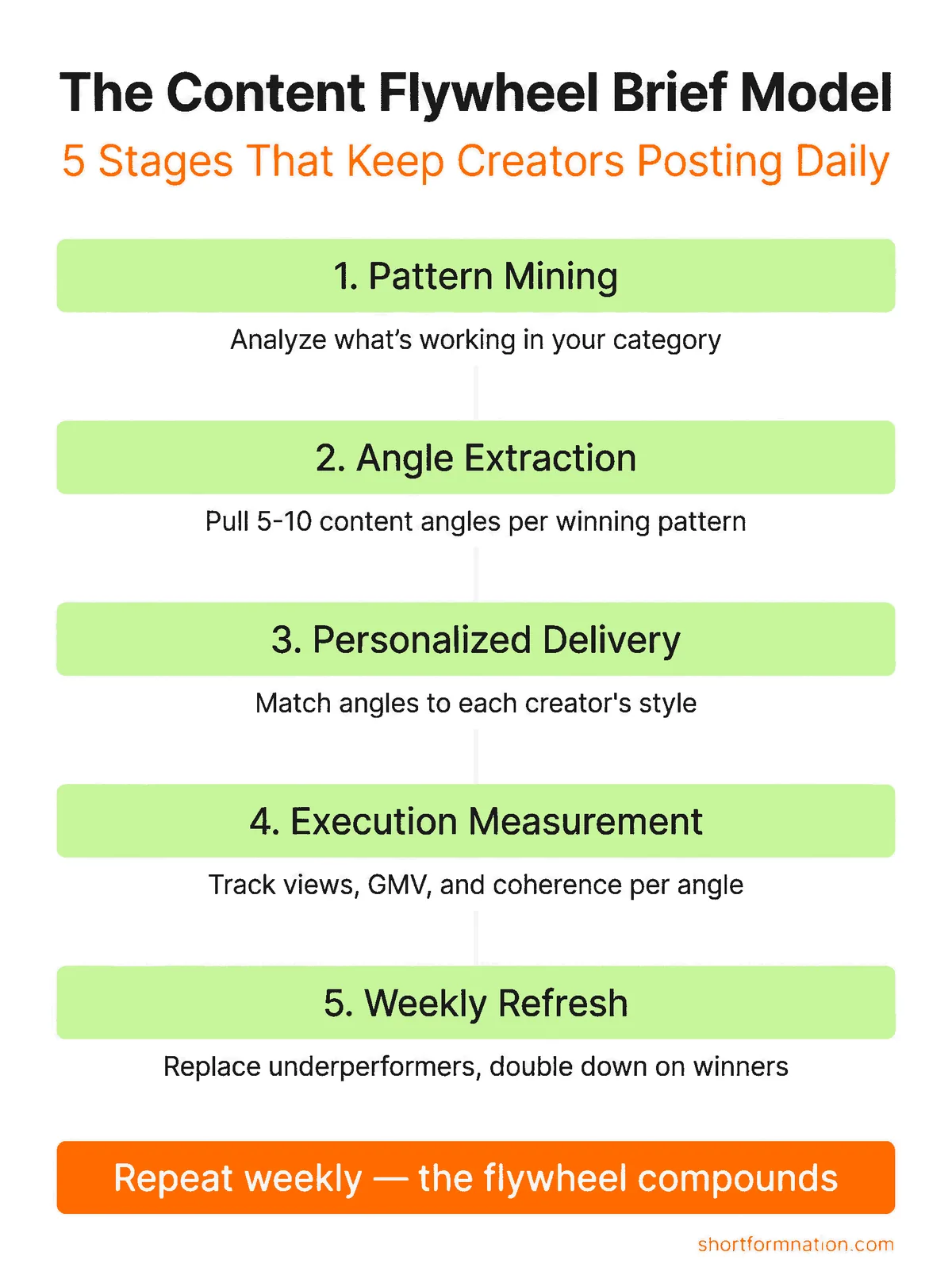
Building the Flywheel Manually
Daily (takes 30 minutes): Open a TikTok Shop category you're working in. Search for trending hooks in the last 24 hours. Watch 10-15 top videos from creators in that niche. Document: Hook type (problem statement, challenge, curiosity gap, social proof, transformation), how they open the first 3 seconds, how they show the product, the CTA they use, and whether they mention price. Drop all of this into a shared doc.
Weekly (takes 2 hours on Sunday): Compile the daily docs into a summary. What angle showed up three times? What hook got the highest average engagement? What's trending that wasn't trending last week? Create a one-page brief for each creator based on the patterns and their specific voice. Send via Slack or email with subject line: “Your angle for this week: [one angle], based on [proof video link], target: [X videos this week].”
Bi-weekly (takes 1 hour): Review creator submissions. Which angles got posted? What were the results? Add a “What Worked” and “What Didn't” section to next week's briefing so creators see what their peers nailed and what missed.
Monthly (takes 3-4 hours): Deep analysis. Pull performance data by angle type, by creator tier, by product. Identify your top-performing angle (the one getting highest GMV per video). The next month, the brief strategy shifts to double down on that angle with more creators.
That's manual flywheel building. It's doable, but it scales only so far — usually to 20-30 active creators before the daily mining work becomes impossible.
This is where an intelligence platform comes in. SFN AI mines TikTok Shop patterns daily, extracts angles in real-time, matches them to creator voice profiles, and sends personalized briefs to creators automatically. Instead of 30 minutes a day, the brand does 5 minutes a week reviewing the briefing summaries. But whether you build the flywheel manually or use an intelligence platform, the principle is the same: stop thinking of the brief as a document and start thinking of it as a daily delivery system.
One emerging strategy: using AI to generate briefs, scripts, and hook frameworks — all exempt from TikTok's AI content labeling requirements. For the full breakdown of where AI adds value in TikTok Shop content production versus where it risks demonetization, see our guide to AI-generated UGC for TikTok Shop.
Measuring Brief and Content Pipeline Effectiveness

Brief-to-Content Conversion Rate
This is the percentage of creators who actually post after receiving a brief. Calculate it: (Number of creators who posted) / (Number of creators who received the brief) x 100.
Benchmark: If you're below 40%, your briefs are either too complicated or misdirected. If you're hitting 60-75%, you're in the zone. If you're above 80%, your briefs are probably too simple (you might be missing upside by not challenging creators enough).
Track this weekly. If it dips, it usually means one thing: the last batch of briefs didn't match creator voice or the angles felt stale.
GMV Per Briefed Creator
Total GMV from all creator videos in a month, divided by the number of active creators you briefed. This tells you the average revenue per creator per period.
Benchmark: For mid-tier creators (10K-100K followers), expect $200-600 GMV per creator per month. Nano creators will run $50-200. Macro creators $1,000+.
The real win is watching this number climb month-to-month as your brief strategy improves. Month one might be $250 average. Month three, after you've refined the flywheel, it should be $400-500.
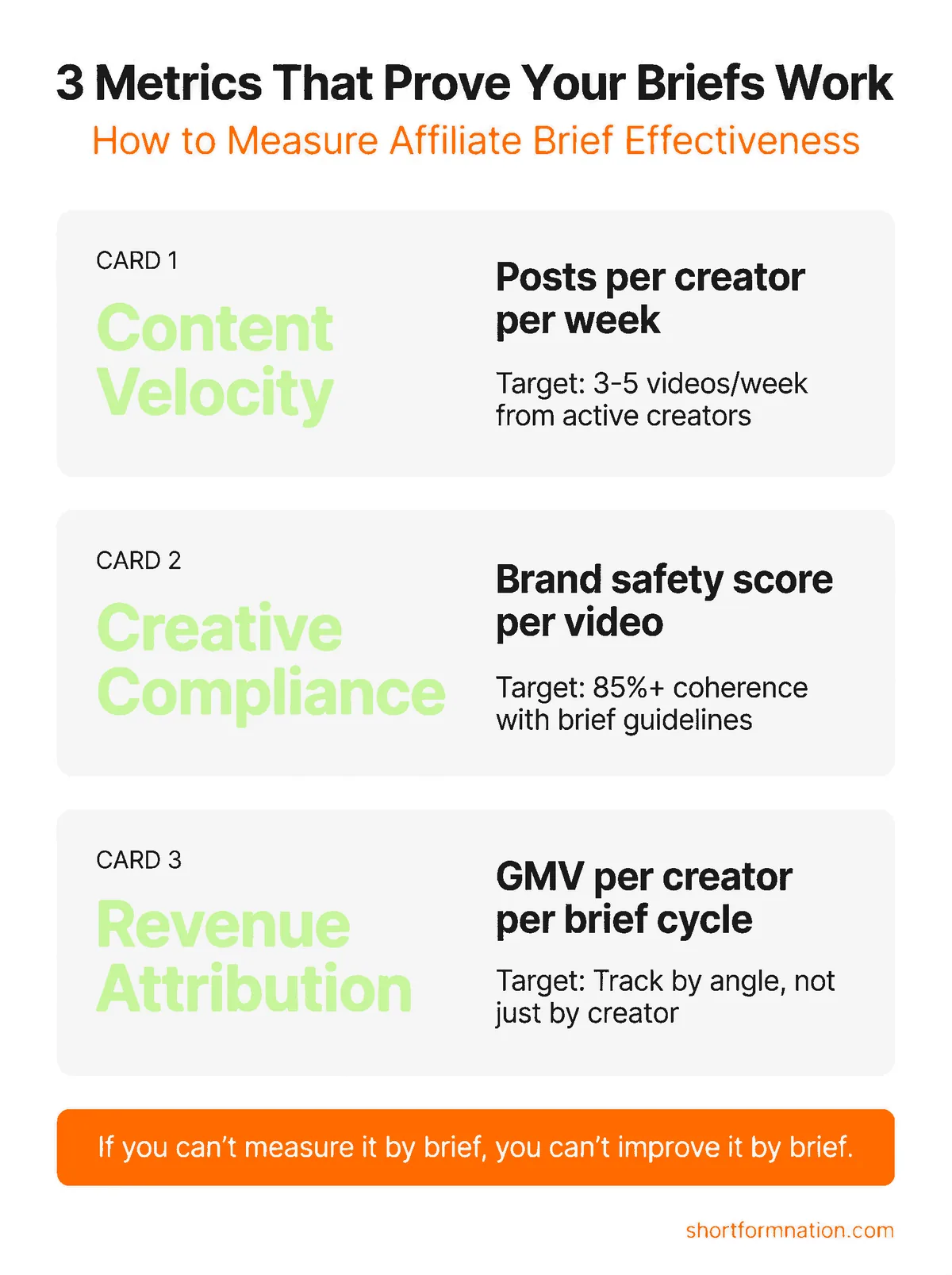
Content Velocity by Creator
How many videos each creator posted per week after receiving a brief. Track this by creator and by tier.
Benchmark: Nano creators should hit 2-3 videos per week. Micro should be 1-2. Macro should be at least 1 (or they're wasting your partnership).
If a creator's velocity drops after a brief, the brief sucked. If it stays the same or climbs, you're on the right track. This metric directly correlates to GMV — more posts = more chances to convert.
The most effective brief programs don't just measure output — they measure change. It's not “we got 25 videos,” it's “we increased video production per creator from 0.8 to 2.1 per week after implementing the flywheel.”
Stop Briefing. Start Directing.
The brief is not a one-time artifact. It's a system. It's the operating layer between your brand strategy and your creator output. And if you're sending a static brief and wondering why creators go quiet, you're solving the wrong problem.
The creators aren't the problem. The system is.
Shift from “here's what we want you to make” to “here's what's actually working right now, matched to your voice, with proof it converts.” Measure how that shift moves the needle on video production, GMV, and content quality. Watch your pipeline go from stalled to flying.
This is how the best TikTok Shop brands operate. They don't brief once. They direct continuously.
Understanding how TikTok Shop's affiliate model compares to traditional programs can sharpen your brief strategy. Our TikTok Shop affiliate vs Amazon Associates comparison breaks down where DTC brands win on each platform. And for the analytics framework that tells you which briefs and creators are actually driving results, see our guide to TikTok Shop affiliate analytics.
Writing effective briefs is part of the complete TikTok Shop affiliate marketing funnel. For the full playbook — from commission structures to campaign setup to scaling — see our comprehensive guide: TikTok Shop Affiliate Marketing: The Complete 2026 Guide. And for a deeper look at how social commerce is reshaping the entire affiliate landscape, explore our analysis of social commerce trends in 2026.
If you're running a TikTok Shop affiliate program and briefs are becoming a bottleneck — if you're losing creators to silence, struggling to get consistent posting velocity, or watching GMV plateau — SFN AI automates the flywheel. Continuous pattern mining, personalized angle delivery, weekly briefing cycles, performance tracking — all built in.
Last Updated: March 2026
Founder of SFN AI. We watch TikTok Shop 24/7 so creators and the brands that run them get the playbook.